
I had a profound experience this week. I learnt much about myself but also about my identity. And a big reminder of a fundamental lesson: you can’t change the world being a lone wolf. And there are good people out there who can rally around a common cause.
For several years now I’ve created a drum and banged it about responding to the issue that Cockney was ‘dying out on the streets of London’. It was prompted by a respected report by a professor of sociolinguistics that the language would die within 30 years on the streets of London.
Being the person that I am, where seeing something I believe to be wrong, I feel the urge to do something about it, I rose to a challenge of ‘What can I do to stop Cockney dying?’ I felt this to be an important issue. Although I moved away from London on going to university back in 1977, as a friend observed, ‘You can take Andy out of the East End, but you can’t take the East End out of Andy.’
I also have a professional career in public relations and campaigning with a particular interest in storytelling and memes – how ideas spread and can take hold. It seemed to me that if nothing was done the story of Cockney will be told in the past tense. And I should do something.
Hence, ‘Speak Cockney Day’ on March the 3rd was born.
Why a theme day? My first ever professional award was for a campaign to promote a day of regional identity, ‘Yorkshire Day’ on August 1st. The idea of ‘Yorkshire Day’ was created by my dear old friend Colin Holt of the Yorkshire Ridings Society. Our campaign transformed it. (Before for example, the ‘Yorkshire Post’ calendar never referenced it, now it does.) It seemed an obvious way forward to create a special ‘Cockney’ day.
Why March the 3rd? My knowledge of memes is that ideas spread by firstly being ‘sticky’. They need to be coherent, easily remembered and passed on as intact as possible. Secondly, to give the idea rocket fuel, they need to engage and refuel emotionally; your idea needs to be emotionally attractive to appeal and also make you feel better through their sharing and passing on to others.
To pass the memorability test I couldn’t find any special ‘London’ day. Instead, I had to create one that had a coherent story, memorable, sticky and people would be inclined to pass on. Thus, March the 3rd, resonated playing up the Cockney inability to ‘properly’ pronounce their ‘th’s’. (I know this from bitter experience as my teacher at primary school would haul me out and yell at me when I used to call my class registration number out of ‘33’: ‘Gr-e-e-n, It’s th-h-hirty th-h-hree!’.) And everyone smiles wen I explain why March the 3rd.
So, for three years, flying solo, I would issue a news release calling out to the world that we need to celebrate ‘Speak Cockney Day’ on March 3rd. Two years ago, I sponsored a design competition with a creative community, One Minute Briefs to promote ‘Speak Cockney Day’. This created a wonderful legacy of humorous, provocative and delightful messages to share on social media (there’s an example at the beginning of this article).
I tried reaching out. Emails to the Museum of London and other bodies went unanswered. This year, having been on a brilliant online local history course about the East End, run by the Bishopsgate Institute, I approached them last month to see about doing an online event, celebrating East End identity through Speak Cockney Day. A real nice bloke there politely told me they didn’t have time to do it.
Last week, the social enterprise Grow Social Capital I helped set up, along with Matt Appleby, Russell Todd and Sarah Tamsin, organised ‘Social Capital Week’ which was a great success in providing a platform for our cause.
One of our online events only had about 10 people attend yet was still a brilliant experience. Last Friday I thought ‘Sod it, just go for it’ and speculatively sent some emails out to the academics who had produced the original report, and to another academic who, thanks to a brilliant lady – Sheila in the Warwick University Press Office – had written an article about my previous efforts on Speak Cockney Day.
Given the short notice I didn’t really hold out much hope. On Sunday night at my weekly online Sunday night ‘Rave’ with old university mukka Graham, from South London, we worked out a contingency that me and him were just going to do an online chat about ‘what it means to be Cockney’ and see who turned up.
It turns out that sociolinguists are like London buses. When you least expect it, three turn up at once!
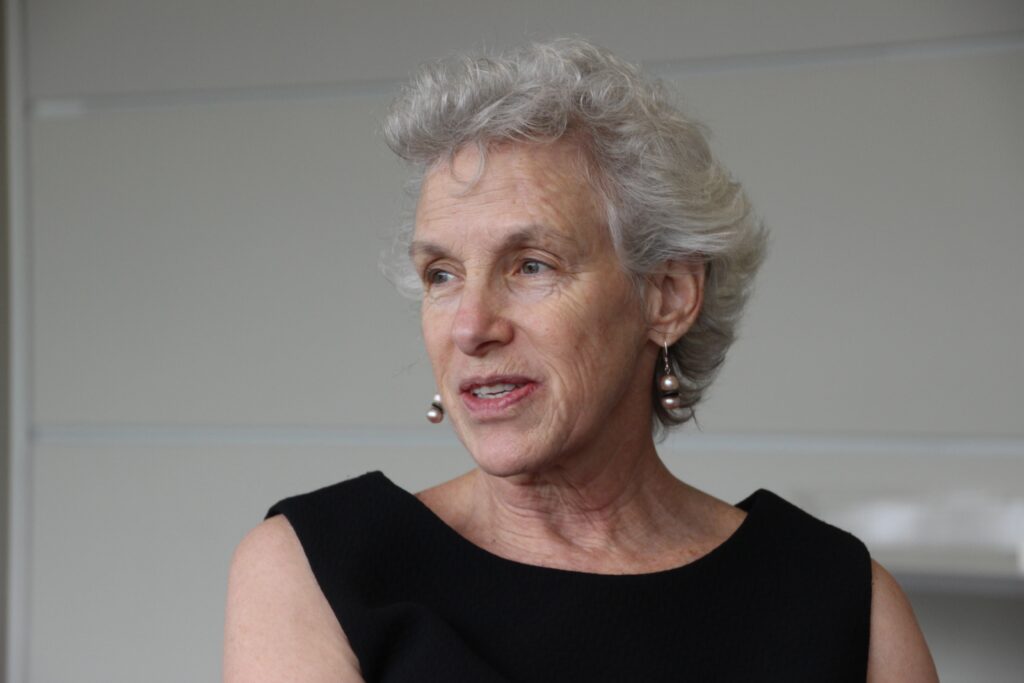
First, the legendary Sheila at Warwick University Press Office helped connect me with Dr. Christopher Strelluf, Assistant Professor of Linguistics, who had written about Speak Cockney Day the previous year. And late Monday afternoon Christopher confirmed he could do the event two days hence. And on Monday evening, Professor Kerswill confirmed he could do it as well. And on the day, at the event, another sociolinguist, Dr. Amanda Cole of the University of Essex, also turned up.
A very late Monday evening saw the event go live on Eventbrite followed by furiously posting on London Facebook groups. Much to my surprise, rather than an event with just me and my mate Graham, and the hope of a dog turning up, we had two advertised eminent academics generating an amazing response of over 65 people booked.
It truly was a magnificent event. Paul, Christopher and Amanda (who joined in) were erudite, insightful and engaging expanding our knowledge of language, its social impact, and how language is an eevolving, dynamic entity that never stands still.
The audience engagement was superb. I have never witnessed such a vibrant chat dialogue, nor such great questions being asked, with a delightful post-event chat with a large group who stayed on. Some useful connections were made with a whole variety of interesting people. It was enriching seeing some old friends there, from school and university, while making new ones.
I learnt some profound lessons about the subject of ‘Cockney’ that was integral to me,my identity, pride and passion.
We are going to rewrite the story of Cockney to include its future success
In my storytelling workshops I share about one of the basic narrative patterns of timeline. How you tell a story of its past, present and future. And how the balance of these elements, in itself, tells a story.
Cockney was seemingly a story with a strong past, a diminishing present, and no future. The challenge is, ‘How do we rewrite the story of Cockney, with a future that is successful rather than dead?’
The profound lesson is putting our thinking and practices within our social enterprise, Grow Social Capital into practice: if you want to change the world you can’t do it by yourself. To create real change rather than noise, you can’t be a Lone Wolf, you need to grow a community of changemakers. These changemakers need to have a shared vision, cause and end goal.
The lessons I learned about ‘Cockney’.
Firstly, it’s more than, as Del Boy on ‘Only Fools and Horses’ would say, a ‘Lingo Franco’. It’s a state of mind, an attitude. A way of defining yourself and your response to your world.
It came clear to me while listening to the incredible stories being shared at the event that Cockney spirit has three key characteristics:
- Resilience and defiance – that you survive and stand up for yourself.
- Resourceful and generosity with your own – you make the most of difficult circumstances, of situations where you have been dealt a poor hand, and look after each other.
- Irreverence – you don’t take things too seriously, having a larf at yourself, others and especially authority.
The ‘Cockney Diaspora’ may be miles away from London, or separated by generations, are still defined by this Cockney spirit. Why? Because they are resilient and defiant, resourceful and generous, and irreverent. These very qualities mean they don’t just blend in, dissolve within some new territory or culture. The thing that marks them out as Cockneys keeps the flame of Cockneydom alive.
Secondly, the DNA of Cockney is still very much thriving. Under the veneer of ‘Essex’ (as researched by Dr. Amanda Cole) or the wider ‘Estuary English’, Cockney has got its fingerprints all over them. Cockney is alive in its children, grandchildren, and great grandchildren of the historic Bow Bells.
Thirdly, in its historic London heartland (being born within the sound of Bow Bells is its historic root, not its defining measure) Cockney is evolving. It’s what I call the ‘Pearly Burka’ (an idea inspired by a Facebook exchange. A long story, but was asking if anyone knew where I could hire a Pearly King outfit. One bloke replied: ‘I wouldn’t bother mate. They all wear Burkas now’. Although it seemed evident where this guy was coming from in his racist innuendo, I replied, ‘That’s a brilliant idea!’ And I think it is.)
Yes, the cultural mix of the East End has changed. But it’s always had a persistent stream of incomers, newcomers different from those already there. And even though the mother tongues may not be English, there’s an adaption of the way of talking, style influencing the language of the streets that features Cockney in its DNA.
Fourthly, Cockney is colour blind. Yet iff you want a media stereotype of a racist person, guess what accent is portrayed, Yep,99% of the time Cockney, And it’s a stereotype that gets reinforced with every reiteration.
Sure, I grew up in the ‘70s witnessing the rise (and fall) of the National Front. I had many mates who were racist. And yes, some racist thugs did have Cockney accents.
The Battle of Cable Street on October 4th 1936 was an historic landmark in working-class history, where fascist Black Shirts were defeated on the streets of London. We need to remember (and celebrate) how there were more anti-fascists than Blackshirts. And these anti-fascists would be mainly speaking with Cockney accents.
Going forward any assertion of Cockney needs to celebrate its immigrant origins, its inclusivity, and generosity of spirit for all within its communities.
“Never doubt that a small group of thoughtful, committed citizens can change the world: indeed, it’s the only thing that ever has.”
Margaret Mead
I use Margaret Mead’s quote as a guiding principle.
I think there is value in the Cockney Manifesto I shared at the event of:
- Establish Cockney as something worth celebrating and keeping alive, vibrant and relevant by monitoring its health and use
- Get London cultural organisations to pull their finger out and do something – including the London Assembly, Museum of London, Bishopsgate Institute, London’s universities, schools, theatres and others
- Get celebrity figures to support and celebrate its importance – such as Adele, Russell Brand, Michael Caine, Danny Dyer, Suggs and more
- Encourage Cockney culture’s relevance to young people
- Promote Cockney culture’s inclusivity – the ‘Pearly Burka’ – to celebrate shared identities
- Campaign for the BBC and other broadcasters to use more Cockney and other working-class accents, and avoid reinforcing negative stereotypes
- Create a wider social good to raise funds for charities linked with Cockney culture or London
I am now reaching out. To those at the event. Those who care about all things Cockney. Those who are angry that regional accents still being used as a form of discrimination. Those who feel the world is a poorer place with accent levelling’ (a term I discovered from Professor Paul).
Let me know if you too care. Email me, post on here, whatever.
By doing something, I, and everyone who feels like me, will be richer, the world will be richer, all creating a story of Cockney with a future tense. All together now.