I pose the question after our experience in commemorating the 90th anniversary of The Battle of Cable Street in east London last week.
Yes, when faced with intimidation, we need to stand up and oppose.
Yet, if we are truly to overcome fascism we need to unite people through their shared humanity and what they have in common, rather than what divides them.
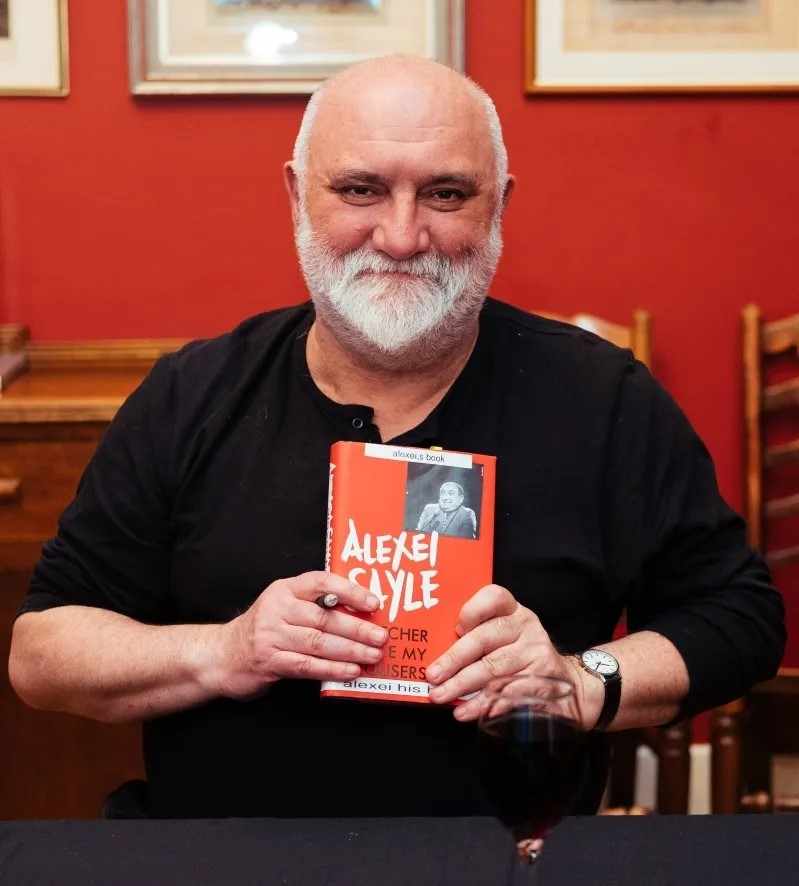
On 30 September, we co-hosted event called ‘Comedy v Fascism’ with comedians Alexei Sayle, Joe Sellman-Leava , and Kate Smurthwaite. Like any good conversation it sparked revealing insights.
The whole event had been framed as a conversation, yet what emerged was a wonderful power of humour not just as a tool to destroy your opponent but also for providing agency in bringing people together.
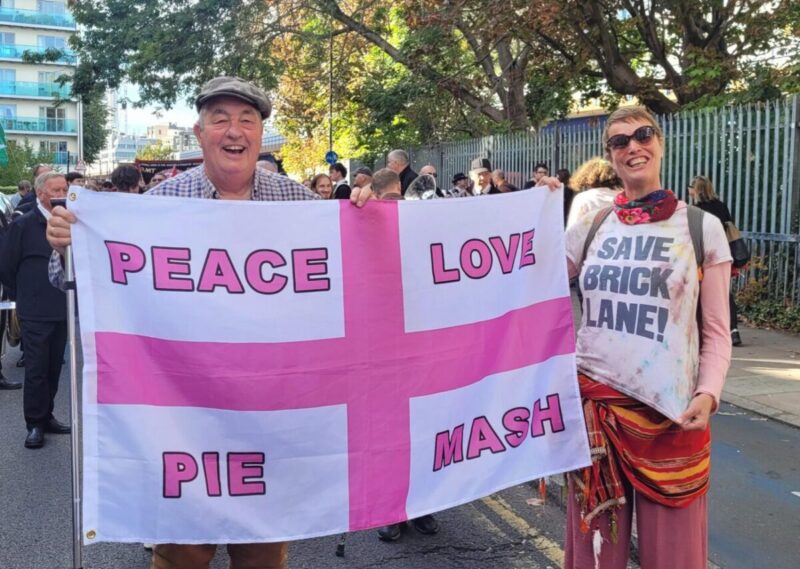
Putting this into action at the rally commemorating the Battle of Cable Street, we flew our English-with-a-twist flag: a pink St. George cross with the words proclaiming ‘Peace, Love, Pie, Mash’.
With humour it made simple a complex message of celebrating our shared heritage and cultures we can create a better world. In this case anchoring the universal themes with a key icon of East End and Cockney culture – it’s beloved Pie’n’Mash.
The idea is supported by good theory.
“There’s nothing so practical as good theory” declared the social psychologist, Kurt Lewin. Good theory helps direct, prioritise, and underpin more effective and optimised actions. Deeper theoretical underpinnings could provide stronger foundations for those working to build greater social cohesion
Building greater social cohesion around our shared social identities needs to start by creating spaces where people can explore who they are without fear, pressure, or political framing.
This requires developing thinking and we draw on the work of Professor Ted Cantle in this respect. Cantle advocates for the embracing of the positive qualities of Multiculturalism – recognising and protecting distinct cultural groups living alongside one another – but extending its potential through Interculturalism emphasising meaningful interactions, shared experiences, and co‑creating common shared identities.
In short, multiculturalism values difference; interculturalism adds connection.
Using a weaving analogy, social cohesion – or as our we prefer to call ‘rubbing along together-ness’ – is woven through vertical strands of warps (representing multiculturalism) and horizontal strands of wefts (representing interculturalism).
Sharing lived experience rather than abstract debate needs to be an integral part of a wide-ranging partnership activities promoting cohesion to overcome the rise fascism and the Far Right in modern-day Britain.
Going forward, let’s use direct opposition when faced with intimidation, but employ both multicultural and intercultural approaches for building a united country that rejects fascism.
What do you think?